1.Kinetic energy: The energy of a moving object.
2.Potential energy: Energy stored in an object.
3.Temperature: The average kinetic energy of the molecules in a material.
4.Heat: Energy that flows between objects that have different temperatures.
5.Radiation: The transfer of energy by electromagnetic waves.
6.Conduction: The transfer of energy by the flow of a liquid or gas.
7.Insulation: Prevents heat from flowing in or out of a material.
HI, Im a student of the school AIPCV.My name is Rodolfo Rodriguez and in this blog yu"re going to learn a lot about science.
lunes, 25 de abril de 2011
Vocabulary #3
1.Compound: A chemical combination of two or more elements.
2.Chemicl bond: A link that atoms or electrically charged particles can form with each other.
3.Chemical formula: A way of ussing letters and numbers to show how much of each element is in a substance.
4.Ion: An elecrically charged particle with unequal numbers of protons and electrons.
5.Molecule: A group of bonded atoms that act like a single particle.
6.Chemical property: A way of describing how a substance changes chemically with other substances.
7.Exothermic: A reaction that gives off heat.
8.Endothermic: A reaction that absorbs heat.
2.Chemicl bond: A link that atoms or electrically charged particles can form with each other.
3.Chemical formula: A way of ussing letters and numbers to show how much of each element is in a substance.
4.Ion: An elecrically charged particle with unequal numbers of protons and electrons.
5.Molecule: A group of bonded atoms that act like a single particle.
6.Chemical property: A way of describing how a substance changes chemically with other substances.
7.Exothermic: A reaction that gives off heat.
8.Endothermic: A reaction that absorbs heat.
Vocabulary #2
1.Element: A substance that cannot be broken down any further into anything simpler.
2.Atom:The smallest particle of an element that has the same chemicla properties as the element.
3.Nucleus: An atom"s dense center,where most of it"s mass is.
4.Electron: A negatively charged particle that moves around an atom"s nucleus.
5.Proton: A positively charged particle inside an atom"s nucleus.
6.Neutron: A particle with no charge inside an atom"s nucleus.
7.Atomic Number: The number of protons in an atom.
8.Metal: Any of a group of elements that conduct heat and electricity,is shiny and bendable.
2.Atom:The smallest particle of an element that has the same chemicla properties as the element.
3.Nucleus: An atom"s dense center,where most of it"s mass is.
4.Electron: A negatively charged particle that moves around an atom"s nucleus.
5.Proton: A positively charged particle inside an atom"s nucleus.
6.Neutron: A particle with no charge inside an atom"s nucleus.
7.Atomic Number: The number of protons in an atom.
8.Metal: Any of a group of elements that conduct heat and electricity,is shiny and bendable.
domingo, 20 de marzo de 2011
Vocabulary #1
1.Matter: Any solid liquid or gas.
2.Mass:The measure of how hard is to pull or push an object.
3.Volume: The amount of space an object takes up.
4.Density: The amount of mass in a certain volume of material.
5.Physical property: A property that can be observed without changing the identify of a substance.
6.Physical change: A change in size,shape or state without forminf a new substance.
7.Solution: A mixture of one substancedissolved in another so that the properties are the same thorought.
8.Chemical change: A change in matter that produces a new substance with different properties from the original.
2.Mass:The measure of how hard is to pull or push an object.
3.Volume: The amount of space an object takes up.
4.Density: The amount of mass in a certain volume of material.
5.Physical property: A property that can be observed without changing the identify of a substance.
6.Physical change: A change in size,shape or state without forminf a new substance.
7.Solution: A mixture of one substancedissolved in another so that the properties are the same thorought.
8.Chemical change: A change in matter that produces a new substance with different properties from the original.
miércoles, 1 de diciembre de 2010
Summary #9
The blood system
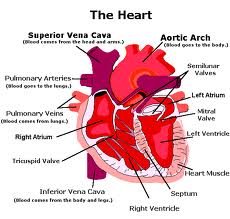
I learn from this topic that we have red blood cells , white blood cells and platelets.Also we learn the heart parts.And finnally that capilaries connect veins and arteries and that arteries have the blood bright red and veins have the blood dark red.
Summary #8
How ecosystem change
I learn from this topic that the ecosystem change like a farm.An adandoned farm,then there start to come many butterflies and insects.Then,many plants start to grow and birds and rabbits start to come.The, appear more plants and birds.Then, there grows trees and weeds and start to appear foxes.And finnally,it"s become a forest.
Suscribirse a:
Entradas (Atom)