jueves, 28 de abril de 2011

Vocabulary #6

1.Solar Cell: A device that generates an electric current on sunlight.


2.Biomass Convenction: Getting energy from plants and animals materials by changing them into high qualities fuel.
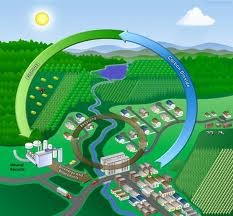

3. Nuclear Fission: The splitting of a nucleus with a large mass into two nuclei with smaller masses.


4.Chain Reaction: A reaction that is kept going by product of their reaction.

5.Nuclear Fusion: The merging of nuclei with smaller masses into nucleus with a larger mass.


6.Hidroelectricity: The use of flowing water to generate electricity.


7.Thermal Pollution: The excess heating of the environment.

lunes, 25 de abril de 2011

Vocabulary #5

1.Thermal expansion: The expansion of matter when its temperature is raised.

Pressure: The force on each unit of area of a surface.

3.Melting: The change of a solid into a liquid.


4.Vaporization: The change of a liquid to a gas as molecules break free from each other.

5.Condensation: The change of a gas to a liquid as molecules break free from each other.

6.Freezing: The change of a liquid into a solid.

7. Boiling: The formation of bubbles of vapor that escape from a liquid that is being heated.


8. Evaporation: The vaporization of molecules from the surface of a liquid.

Vocabulary #4

1.Kinetic energy: The energy of a moving object.


2.Potential energy: Energy stored in an object.

3.Temperature: The average kinetic energy of the molecules in a material.


4.Heat: Energy that flows between objects that have different temperatures.


5.Radiation: The transfer of energy by electromagnetic waves.


6.Conduction: The transfer of energy by the flow of a liquid or gas.

7.Insulation: Prevents heat from flowing in or out of a material.


Vocabulary #3

1.Compound: A chemical combination of two or more elements.

2.Chemicl bond: A link that atoms or electrically charged particles can form with each other.

3.Chemical formula: A way of ussing letters and numbers to show how much of each element is in a substance.

4.Ion: An elecrically charged particle with unequal numbers of protons and electrons.

5.Molecule: A group of bonded atoms that act like a single particle.

6.Chemical property: A way of describing how a substance changes chemically with other substances.

7.Exothermic: A reaction that gives off heat.


8.Endothermic: A reaction that absorbs heat.

Vocabulary #2

1.Element: A substance that cannot be broken down any further into anything simpler.


2.Atom:The smallest particle of an element that has the same chemicla properties as the element.


3.Nucleus: An atom"s dense center,where most of it"s mass is.


4.Electron: A negatively charged particle that moves around an atom"s nucleus.


5.Proton: A positively charged particle inside an atom"s nucleus.


6.Neutron: A particle with no charge inside an atom"s nucleus.


7.Atomic Number: The number of protons in an atom.


8.Metal: Any of a group of elements that conduct heat and electricity,is shiny and bendable.


domingo, 20 de marzo de 2011

Vocabulary #1

1.Matter: Any solid liquid or gas.

2.Mass:The measure of how hard is to pull or push an object.


3.Volume: The amount of space an object takes up.


4.Density: The amount of mass in a certain volume of material.


5.Physical property: A property that can be observed without changing the identify of a substance.


6.Physical change: A change in size,shape or state without forminf a new substance.


7.Solution: A mixture of one substancedissolved in another so that the properties are the same thorought.


8.Chemical change: A change in matter that produces a new substance with different properties from the original.

6° Grade

6° grade means a new year,to learn more about science, and a lot of fun.

miércoles, 1 de diciembre de 2010

Summary #9

The blood system


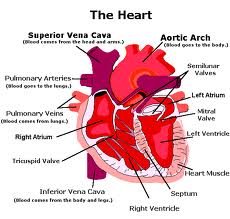
I learn from this topic that we have red blood cells , white blood cells and platelets.Also we learn the heart parts.And finnally that capilaries connect veins and arteries and that arteries have the blood bright red and veins have the blood dark red.


Summary #8

How ecosystem change

I learn from this topic that the ecosystem change like a  farm.An adandoned farm,then there start to come many butterflies and insects.Then,many plants start to grow and birds and rabbits start to come.The, appear more plants and birds.Then, there grows trees and weeds and start to appear foxes.And finnally,it"s become a forest.


Summary #7

Places to live around the world

I learn from this class that a biome is a place where many animals live around the world.The biomes are:Taiga,Deciduos forest,Tropical rainforest,Desert,Tundra and Grasland.


Summary #6

Surviving in ecosystem


I learn from the class of surviving in ecosystems that many animals survive in their ecosystem because
many animals camuflage.Also that there are many kinds of organisms that interact.There are symbiosis,parasitism,commensalism and mutualism.A relationship between two kinds of organisms that last over a period of time is called  sysmbiosis.When a relationship between two kinds of irganisms benefits both of them, it is called mutualism.A relationship in wich one kind of organisms lives on or in another organism and may harm that organism is called parasitism. The relationship where one organism benefits from another without harming or helping it is called commensalism.